

Who Is Liable in a Truck Accident in Atlanta? (It’s Not Just the Driver)
Intro
After a truck wreck, most people assume it’s simple: the driver hit me, so the driver is responsible. Sometimes that’s true. But in serious trucking cases, the driver is often only one part of the story.
Liability can involve the motor carrier, a broker, a shipper, a maintenance vendor, or other companies tied to the truck and the load. Identifying the right parties matters because it affects evidence, insurance coverage, and the value of the case.
If you need a plan, call (470) 762-8810.
Why trucking cases have multiple liable parties Commercial trucking is a system, not a single person.
A crash can be caused by:
- Unsafe driving decisions
- Company pressure and safety failures
- Poor maintenance or inspections
- Overloaded or improperly secured cargo
- Bad hiring, training, or supervision
- Policies and procedures that weren’t followed
That’s why serious truck wreck cases are built by finding the full picture early.
Potentially liable parties in a trucking crash
1. The Truck Driver
Driver fault can include distracted driving, speeding, fatigue, following too closely, unsafe lane changes, or failure to react in time.
But truck cases don’t stop there.
2. The Trucking Company / Motor Carrier
Even when a driver makes the mistake, the carrier may also be responsible for how the driver was hired, trained, supervised, and dispatched.
Common carrier issues include:
- Poor training or supervision
- Pushing unrealistic schedules
- Ignoring safety rules or maintenance needs
- Allowing an unfit driver on the road
3. The Company That Owns The Truck or Trailer
Sometimes the truck and trailer are owned by different entities. Ownership matters for maintenance responsibility and coverage.
4. The Broker (When They Play a Role)
In some cases, a broker may be part of the liability story if they negligently selected an unsafe carrier or ignored known safety issues. These cases require careful investigation and proof.
5. The Shipper or Loading (Cargo Problems)
If cargo is overloaded, unbalanced, or improperly secured, it changes stopping distance and handling. That can turn a “driver mistake” into a bigger operational failure.
Key records:
- bill of lading
- load documents and weight tickets
- cargo securement photos
- dispatch and route expectations
6. Maintenance and Repair Providers
If poor repairs, skipped inspections, worn brakes, or tire issues contributed to the crash, the maintenance chain matters. Inspection reports, service agreements, and repair records can show who failed the safety standard.
How we prove liablity in trucking cases
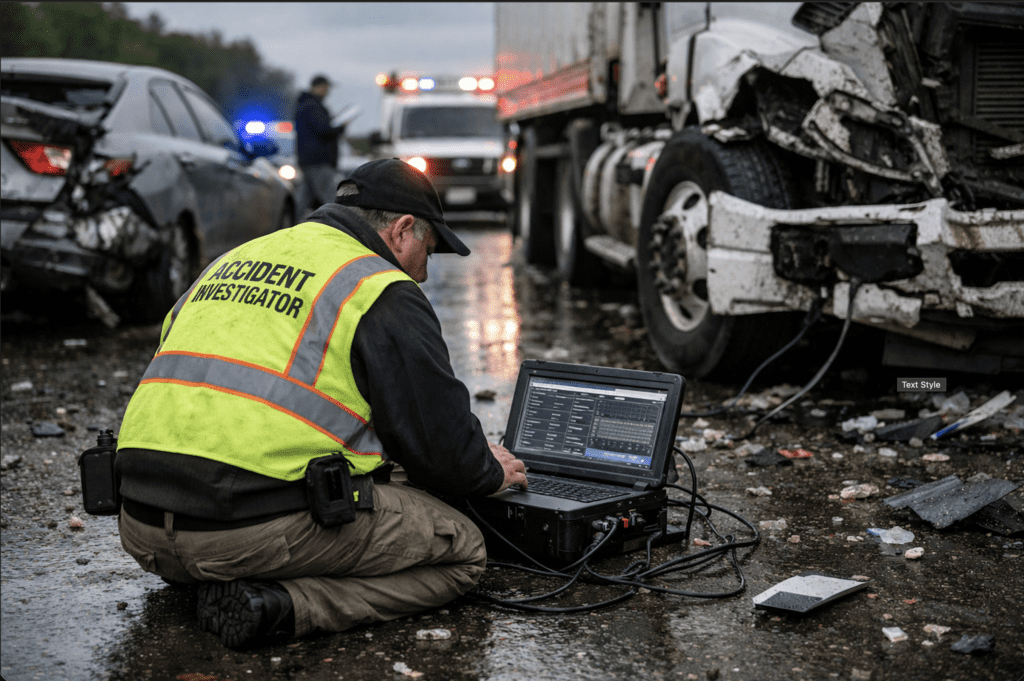
Liability is proven with evidence, not opinions. That includes:
- ECM/EDR data (speed, braking, throttle)
- ELD / hours-of-service logs
- Dash and company camera footage
- Driver qualification file and training records
- Dispatch communications and trip planning
- Maintenance and inspection history
- Cargo and loading records
- Witness statements and scene documentation
This is why early action matters. Evidence can disappear fast if it isn’t preserved properly.
What if the trucking company says you were partly at fault?
Georgia uses a comparative fault system. Fault can reduce recovery, and if a plaintiff is 50% or more at fault, recovery can be barred under the statute’s framework.
That’s another reason truck cases must be built early and cleanly. The goal is to lock in the timeline, protect the evidence, and prevent the “blame-shift” narrative from taking over.
How long do you have to bring a claim?
In Georgia, personal injury actions generally must be brought within two years of when the claim accrues.
Waiting is still risky because evidence and video can be lost long before any deadline.
FAQ
Can I sue the trucking company and not just the driver?
In many cases, yes. Trucking cases often involve company responsibility beyond the driver.
What if the truck driver was an “independent contractor”?
That label doesn’t automatically end the inquiry. The key question becomes control, responsibility, and the full operational chain behind the truck.
How do I know who owns the truck?
The DOT number and carrier information can be used to identify the operating authority and related entities. The deeper ownership and contractual relationships are typically uncovered through investigation and records.
Call now to get a plan
If you’ve been hurt in a truck or commercial vehicle wreck in Atlanta, don’t guess who’s responsible. Let the evidence lead.
Call now: (470) 762-8810
Odetunde Law: Compassionate Care. Courageous Advocacy. Certified Results.